Ankle stability, plantarflexion strengthening and functional mobility from jump rope training.
Your ankles and knees endure an enormous amount of stress every time you walk, run, squat or carry anything heavier than a grocery bag. These joints rely on two critical movements: plantarflexion, which pushes your toes toward the ground and dorsiflexion, which pulls your foot upward toward your shin. When either motion breaks down, you will notice it immediately — maybe as weakness in the arch, a wobble when you step onto uneven ground or the sudden realization that you cannot squat deeply without losing your balance. Ankle sprains, the kind that keep athletes sidelined for weeks, overwhelmingly happen to people whose feet are forced through high volumes of plantarflexion without adequate strength to support it. The arch of your foot is not just a structural curiosity; it is a shock absorber and a stabilizer all in one. Mobility depends on keeping these foundational structures strong.
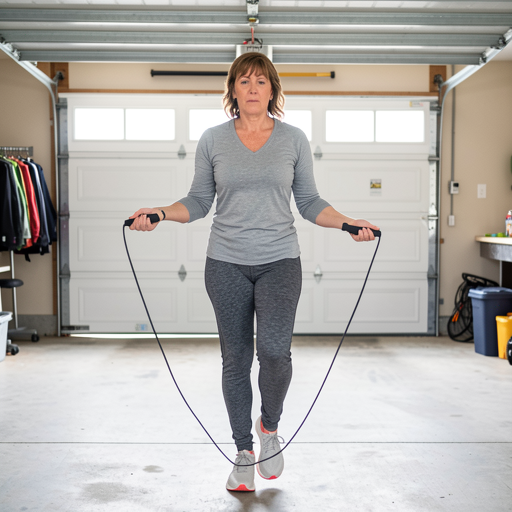
When the muscles and connective tissue in that arch grow weak, plantar fasciitis creeps in, turning every morning step into a sharp, unwelcome surprise. Older adults often feel this most acutely, struggling with basic movements like climbing stairs or standing up from a chair because their tendons and ligaments have simply worn down. The problem rarely starts in one isolated spot. A weak ankle will eventually force your knees and hips to compensate, spreading the pain upward through your entire kinetic chain until you wonder why your lower back has started complaining as well.
☺
This is where jump rope training becomes such a valuable tool. The simple act of skipping builds ankle stability faster than most people expect. Each bounce forces your foot to land precisely, engages every muscle in the lower leg and strengthens the tiny stabilizers that keep your arch firm under load. The rhythm and repetition also improve the range of motion in both dorsiflexion and plantarflexion, keeping those joints fluid instead of stiff.
🥑
Even Jumping rope for twenty minutes each week can dramatically reduce your risk of the sprains and strains that sideline so many recreational athletes. If you have never tried it, start slow, keep your knees soft and let your ankles do the work. To skip effectively, you do not need fancy equipment or a gym membership. A pair of comfortable shoes, a small open space and a willingness to be patient with yourself are enough to get started.
💪
Focus on landing lightly on the balls of your feet, keeping your core engaged and allowing your ankles to absorb impact rather than locking your knees. As your confidence grows, you can add in lateral hops, single-leg bounces and faster cadence drills that challenge your balance and coordination. The beauty of jump rope is that it builds real-world strength — the kind that helps you carry furniture, play with your kids and stay mobile well into your later years. Your ankles will thank you for it.